The transportation sector accounts for nearly 25% of global carbon emissions, making an ev certification course more valuable than ever before. As India makes rapid progress in electric mobility with strong support from both government and private sectors, the demand for skilled professionals continues to grow.
Electric vehicles offer significant advantages over traditional vehicles. Most EV batteries last for hundreds of thousands of miles with warranties typically covering 8 years or 100,000 miles. Additionally, EVs produce no harmful exhaust fumes, improving air quality and reducing carbon footprints. Furthermore, recent innovations have led to remarkable developments such as batteries that can charge to a 320-mile range in just 5 minutes and designs with potential lifespans of up to 100 years.
We at Tata IIS recognize this transformative shift in the automotive industry. Our industry-backed ev course provides specialized training for battery specialists and vehicle specialists, specifically designed to prepare freshers and professionals for ev engineer jobs across India. Importantly, our students train under industry experts using modern equipment actually applied in the field. With dedicated placement support and practical training, we help bridge the gap between education and the booming ev jobs in india.
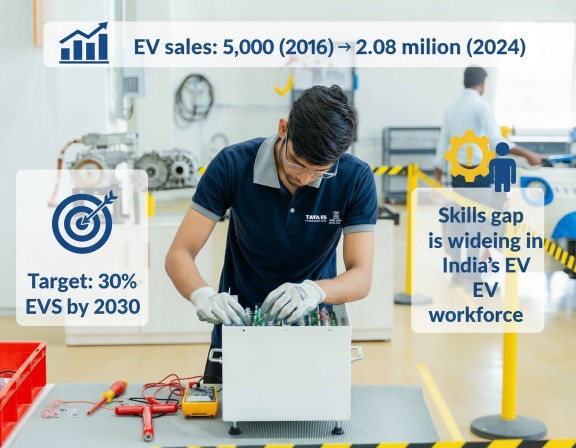
India’s electric vehicle landscape is experiencing remarkable growth, with annual sales rising from 50,000 units in 2016 to 2.08 million units in 2024. To meet the ambitious target of 30% EV adoption by 2030, the country faces a critical challenge: a widening skills gap in the EV workforce.
According to SIAM, India will require between 100,000 to 200,000 skilled EV professionals by 2030. Currently, the industry grapples with a 40-45% skills deficit, as 43% of internal combustion engine competencies have little relevance in the EV ecosystem.
The situation is concerning since most traditional automotive training lacks EV-specific knowledge. Only 40 job roles in existing programs address EV competencies, while merely 8 out of 34 apprenticeship courses focus on EV technologies.
EV technicians need fundamentally different expertise compared to traditional mechanics, including:
Despite the clear need, skilling efforts remain inadequate. Industry leaders warn that workforce training is consistently treated as an afterthought by both government and manufacturers. Moreover, training programs remain concentrated in urban centers, leaving rural regions underserved.
Tata IIS addresses this urgent need through specialized ev certification courses that prepare students for ev engineer jobs nationwide. By offering hands-on training with industry-standard equipment under expert guidance, Tata IIS is developing the next generation of EV specialists essential for India’s electric mobility future.
Established through a strategic partnership between the Ministry of Skill Development and Entrepreneurship and the Tata Group, Tata Indian Institute of Skills (TIIS) directly tackles India’s EV sector skill shortage. TIIS operates two premier campuses, a 4-acre facility in Mumbai and a 20-acre campus in Ahmedabad.
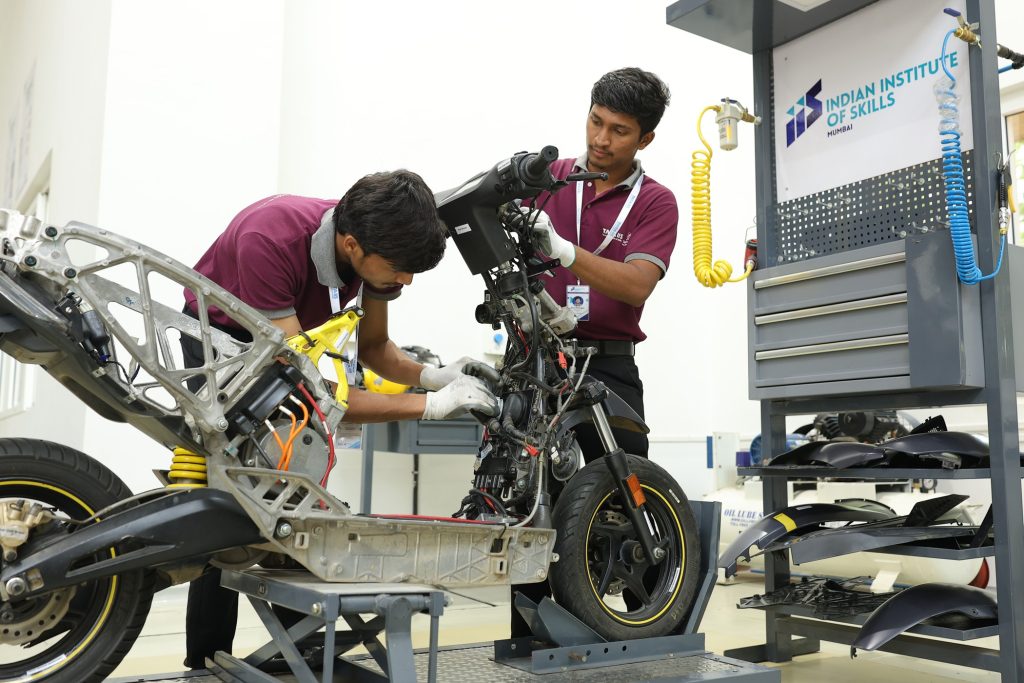
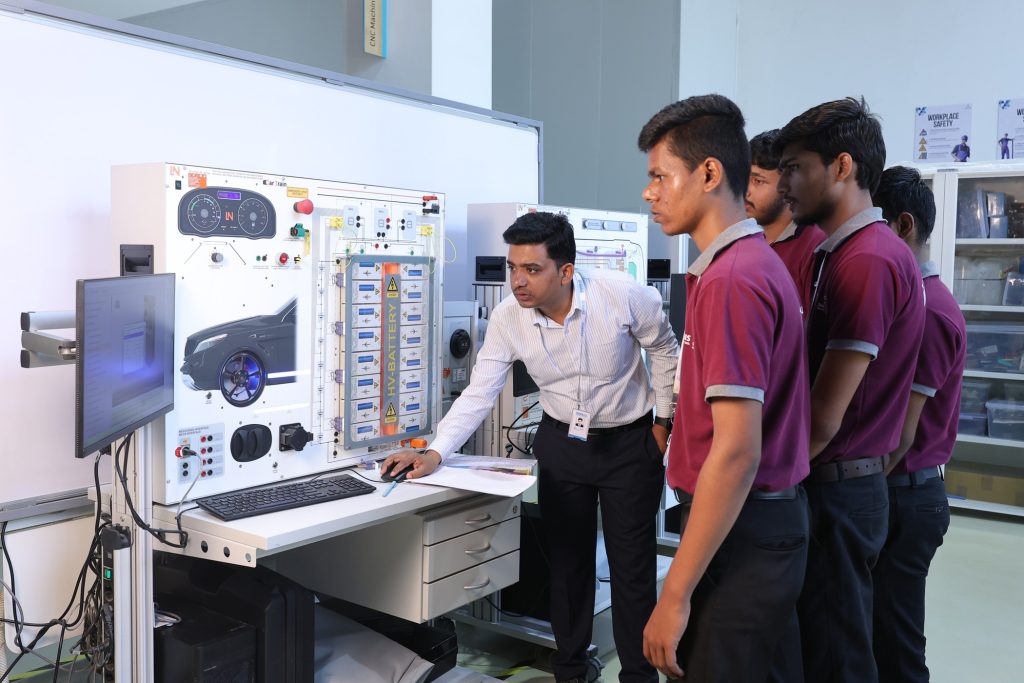
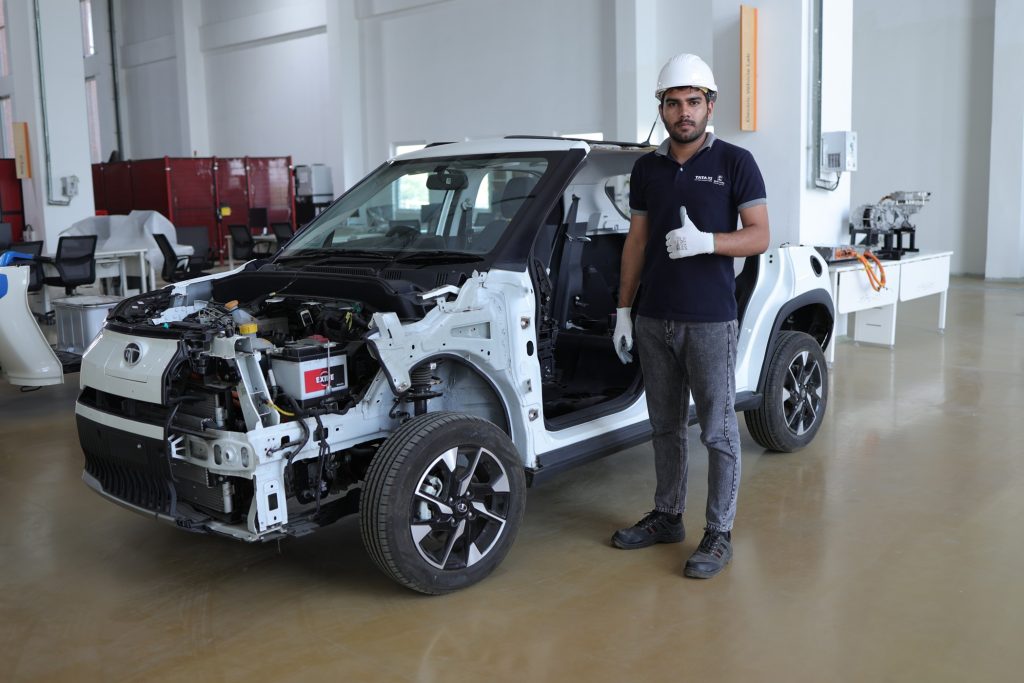
The institute’s EV Battery Specialist program stands out by providing hands-on training on cutting-edge equipment from global leaders like Ather, Festo, and Lucas-Nuelle. Notably, this 12-week program costs ₹30,000 and welcomes graduates and final-year students from all engineering streams.
TIIS follows a practical learning model where 70% of training is hands-on, preparing students for real-world challenges. One trainee from Lucknow remarked, “The 20% theory and 80% practical learning model truly prepares you for real industry challenges”,
The institute has forged valuable partnerships with industry giants including:
Consequently, graduates enjoy impressive placement opportunities—70% of first-batch trainees secured jobs, with 26% receiving multiple offers. Currently, the highest placement offers reach ₹4.5 lakh annually for BTech graduates.
For professionals seeking career advancement in the EV sector, Explore more, visit our website.
After completing Tata IIS’s ev certification course, graduates enter one of India’s fastest-growing sectors, projected to expand at an impressive 49% CAGR between 2022-2030. This booming industry promises to create 10 million direct jobs and 50 million indirect jobs across multiple roles by 2030.
The institute’s track record speaks for itself, 70% of first-batch trainees secured placements, with 26% receiving multiple job offers. Graduates command competitive salaries, with the highest placement offers reaching ₹4.5 lakh annually for BTech graduates, ₹3.8 lakh for Diploma holders, and ₹3.4 lakh for ITI graduates.
Success stories abound: Tushar Jamale and Nikhil Gawali both secured positions at TVS Motors with ₹4.5 lakh annual packages, whereas Dhruv Panchal became an EV Technician at Falcon Motors.
Stop going with traditional way of learning. Unlike conventional automotive training that offers little relevance to EV competencies, Tata IIS certification provides industry-aligned validation of skills that employers trust when recruiting for specialized EV roles.
EV jobs typically pay 45-50% higher salaries at entry level, with abundant opportunities in battery technology, power electronics, thermal management, software integration, and charging infrastructure development. As 30% of vehicles on Indian roads are expected to be electric by 2030, certified professionals will remain in high demand for years to come.
The electric vehicle revolution stands at a critical juncture in India, with Tata IIS positioned at the forefront of specialized skill development. Our EV Battery Specialist and Vehicle Specialist programs directly address the 40-45% skills deficit currently hampering industry growth. Students benefit from our distinctive 70% hands-on training model, working with actual industry-standard equipment from partners like Ather, Festo, and Lucas-Nuelle.
The EV sector promises substantial growth through 2030, creating millions of direct and indirect jobs nationwide. Consequently, professionals with specialized EV certification will remain highly sought-after, commanding 45-50% higher salaries than their counterparts in traditional automotive roles.
We at Tata IIS remain committed to bridging the skills gap through practical education that matters. Our placement support connects talented graduates with industry leaders including Tata Motors, Ather Energy, and TVS Motors. Therefore, students gain both essential skills and crucial industry connections.
As India moves toward its 30% EV adoption target, skilled specialists will drive this transformation. Through our industry-backed programs, we prepare the next generation of EV professionals ready to power India’s electric mobility future from day one.
The EV Battery Specialist program at Tata IIS is a 12-week course that costs ₹30,000. It is open to graduates and final-year students from all engineering streams.
Tata IIS follows a practical learning model where 70% of the training is hands-on, using industry-standard equipment from partners like Ather, Festo, and Lucas-Nuelle. This approach prepares students for real-world challenges in the EV industry.
Graduates of Tata IIS's EV certification courses have excellent career prospects. 70% of first-batch trainees secured jobs, with some receiving multiple offers. The highest placement offers reach ₹4.5 lakh annually for BTech graduates.
EV jobs typically offer 45-50% higher salaries at the entry level compared to traditional automotive roles. This reflects the specialized skills required in the rapidly growing EV sector.
EV specialists need skills in high-voltage electrical safety, battery chemistry, thermal management, power electronics, signal processing, software diagnostics, and programming. These skills are fundamentally different from those required for traditional automotive roles.
Inspired by the tree of knowledge, this logo implies a tree with interspersing dots representing various skills that the institute offers, making it a wholesome skilful tree. The tree’s bark represents individuals with different mindsets coming together with a common purpose of growth. Lastly, one can subtly see the acronym IIS which also represents students as figurines.
To date, we have trained around 650 students. Our alumni are working with notable companies, such as Torrent Power, Powellite Electricals, Tata Motors, Bajaj Auto, and L&T. . Equipped with holistic technical and business skills, many alumni have also chosen the path of entrepreneurship to realise their dreams.
We firmly believe in inclusion. Identifying segments that need us the most is one of our goals. We are mindful of reaching the tribals and marginalised and ensuring maximum women participation.
Learning from the industry is at our core. Our industry partners are deeply involved, right from course design and delivery to recruitment. Our current partners include Fronius, Universal Robots, SMC, Phillips Machine Tools, Multivista, Fanuc, MIR, Markforged, Schneider Electric, Lincoln Welders, Hexagon, Formlabs, ABB, Festo, Ather, Tata Motors, Thermax, Larsen & Toubro, Bajaj Auto Ltd., Carraro, Marriott, Indian Accent, Taj, Lollo Rosso, Tomato’s, Ramada by Wyndham, Novotel, La Milano Pizzeria, Renaissance Hotels, The Fern, Tatr, IFEA, The Job Plus, Happy Faces, Sewa.
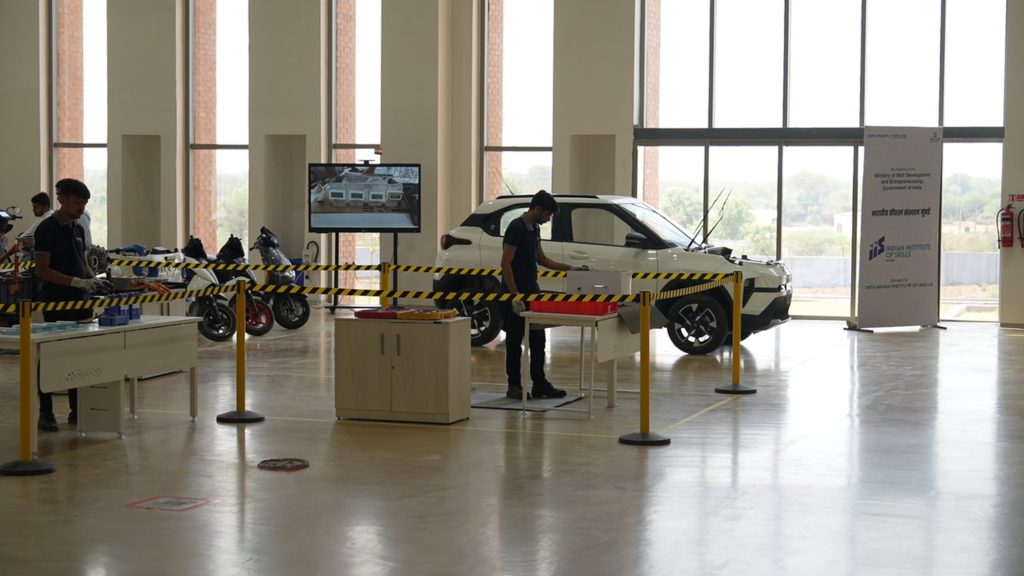
The campus is situated on a 4.17-acre land parcel at Chunabhatti inside the National Skill Training Institute campus in the state of Maharashtra. The first phase of development comprises a 22,500-square-foot facility housing advanced manufacturing and electric vehicle laboratories. The facility also includes classrooms and advanced computer laboratories for training in allied areas, providing trainees with a real-world environment akin to working in the manufacturing industry. It is equipped to train approximately 190 students at a time.
Spanning over 2.5 lakh square feet, the campus features infrastructure that includes training facilities, hostels, and dedicated spaces for student activities, supporting comprehensive learning and growth.